Human Systems · advanced
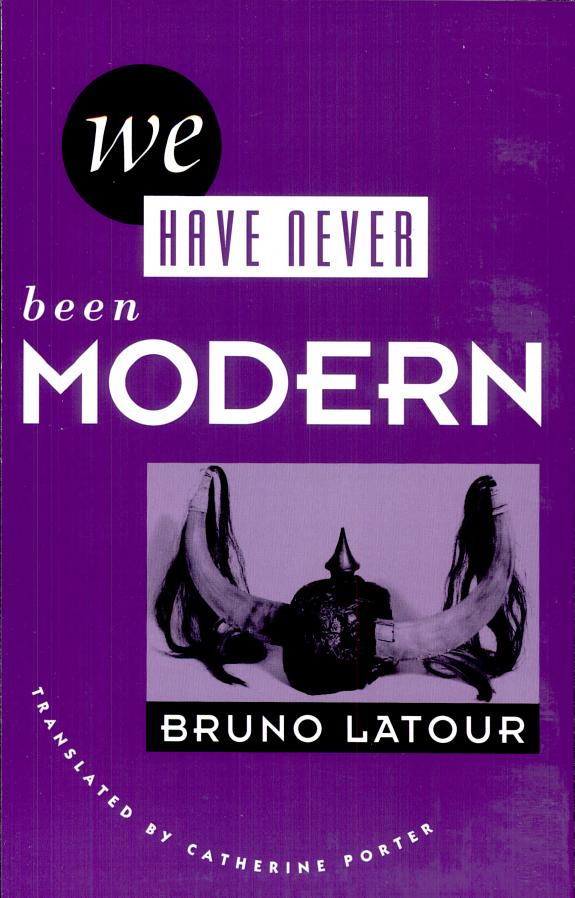
We Have Never Been Modern
by Bruno Latour
About This Book
With the rise of science, we moderns believe, the world changed irrevocably separating us for ever from our primitive, premodern ancestors. But if we were to let go of this fond conviction, Bruno Latour asks, what would the world look like? His book, an anthropology of science, shows us how much of modernity is actually a matter of faith. What does it mean to be modern? What difference does the scientific method make? The difference, Latour explains, is in our careful distinctions between nature and society, between human and thing, distinctions that our ancestors, in their world of alchemy, astrology, and phrenology, never made. But alongside this purifying practice that defines modernity, there exists another seemingly contrary one: the construction of systems that mix politics, science, technology, and nature. The ozone debate is such a hybrid, in Latour's analysis, as are global warming, deforestation, even the idea of black holes. As these hybrids proliferate, the prospect of keeping nature and culture in their separate mental chambers becomes overwhelming--and rather than try, Latoru suggests, we should rethink our distinctions, rethink the definition and constitution of modernity iteself. His book offers a new explanation of science that finally recognizes the connections between nature and culture--and so, between our culture and others, past and present.
Editorial Note
Dismantles the separation between nature and culture. After Latour, you cannot unsee the hybrids everywhere.
Tags
Purchases through Indie Bookstores support Canadian independent booksellers.
Connected Books
Books linked to this one by prerequisite, depth, or bridge relationships.