Architecture · intermediate
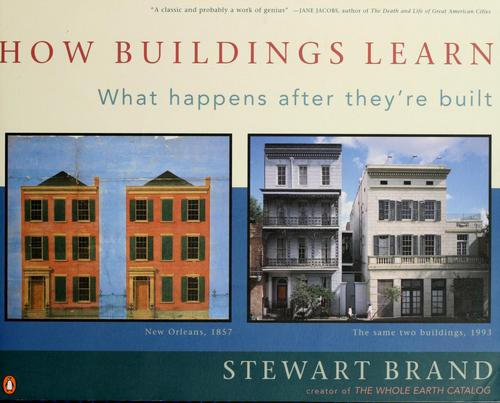
How Buildings Learn
About This Book
Buildings have often been studies whole in space, but never before have they been studied whole in time. How Buildings Learn is a masterful new synthesis that proposes that buildings adapt best when constantly refined and reshaped by their occupants, and that architects can mature from being artists of space to becoming artists of time. From the connected farmhouses of New England to I.M. Pei's Media Lab, from "satisficing" to "form follows funding," from the evolution of bungalows to the invention of Santa Fe Style, from Low Road military surplus buildings to a High Road English classic like Chatsworth -- this is a far-ranging survey of unexplored essential territory. More than any other human artifacts, buildings improve with time -- if they're allowed to. How Buildings Learn shows how to work with time rather than against it. - Publisher.
Editorial Note
Buildings are slow organisms that adapt over time across six shearing layers (site, structure, skin, services, space plan, stuff). One of the most portable ideas in architecture — applicable to software, organizations, and ecosystems.
Tags
Purchases through Indie Bookstores support Canadian independent booksellers.
Connected Books
Books linked to this one by prerequisite, depth, or bridge relationships.