Architecture
Steen Eiler Rasmussen
Danish architect, urban planner, and writer whose Experiencing Architecture became the most widely read introduction to architecture by teaching readers to understand buildings not through abstract theory but through the direct sensory experience of space, light, texture, scale, and rhythm.
Why They Matter
Steen Eiler Rasmussen was born in 1898 in Copenhagen and entered the Royal Danish Academy of Fine Arts at the unusually young age of fifteen, completing his architectural training under the guidance of professors steeped in the Nordic classicist tradition. By his early twenties he was already practicing architecture and participating in the planning debates that would shape modern Copenhagen. His early career combined design work with an emerging interest in urban planning and architectural education that would define his life's trajectory.
Rasmussen's architectural practice produced several notable buildings in Denmark, including housing estates and schools that reflected the Scandinavian functionalist tradition's emphasis on humane scale, natural materials, and sensitivity to landscape. But his most lasting contributions came through his writing and teaching. His 1934 book London: The Unique City offered a comparative study of London's organic urbanism against the planned axes of continental European capitals, arguing that London's apparent disorder produced a richer and more livable urban fabric. The book established his reputation as a writer capable of making complex architectural and urban ideas accessible to a broad audience.
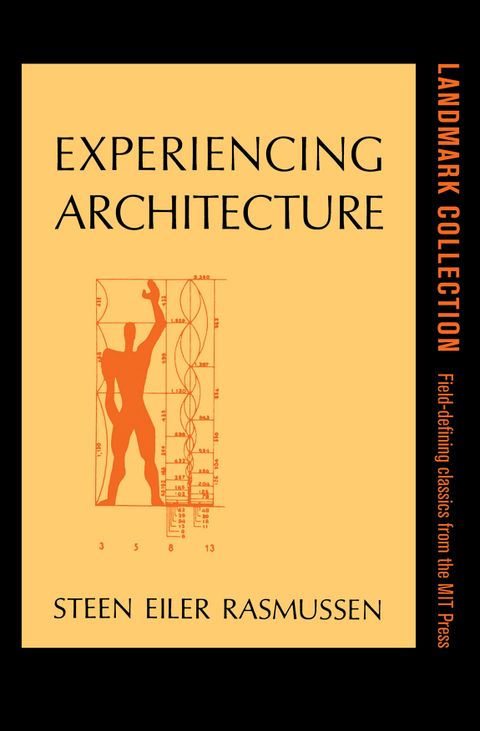
Experiencing Architecture, published in Danish in 1957 and in English in 1959, became Rasmussen's defining achievement. The book approaches architecture not as a history of styles or a catalog of great buildings but as a phenomenological guide to the sensory dimensions of the built environment. In chapters on solids and cavities, color, scale, rhythm, texture, and daylight, Rasmussen teaches readers to attend to the qualities of space that most architectural writing ignores: the way a vaulted ceiling changes the sound of footsteps, how the texture of a brick wall alters with the angle of sunlight, why a low doorway makes a room beyond feel expansive. His examples range from the Parthenon to a Copenhagen street corner, and his tone is that of a patient, erudite guide who assumes no prior knowledge but never condescends.
Rasmussen taught at the Royal Danish Academy of Fine Arts for decades and served as a visiting professor at MIT and Yale, where his lectures reached audiences far beyond Scandinavia. He was instrumental in the planning of Copenhagen's celebrated Finger Plan of 1947, which organized the city's growth along transit corridors radiating from the historic center. He died in 1990, but Experiencing Architecture remains in continuous print and is assigned in architecture schools worldwide, its enduring appeal a testament to Rasmussen's conviction that architecture is not an elite discipline but a universal human experience available to anyone willing to pay attention.