Architecture
Francis D. K. Ching
American architect, educator, and author whose hand-illustrated books on architectural form, space, and graphic communication have served as the standard introductory texts in architecture schools worldwide for nearly five decades.
Why They Matter
Francis D. K. Ching was born in 1943 in Honolulu, Hawaii, and received his Bachelor of Architecture from the University of Notre Dame in 1966. After nearly a decade of professional practice, including service as a VISTA architect at the Cleveland Design Center, he transitioned to teaching at Ohio University in 1972. It was there that his characteristic approach emerged: he hand-lettered and illustrated his lecture notes with such clarity and elegance that a publisher, introduced by colleague Forrest Wilson, saw their potential as a book.
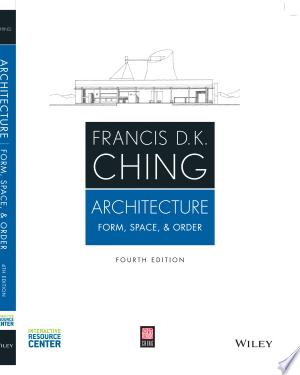
The result was Architectural Graphics, published in 1975, which established Ching's distinctive method of teaching design principles through meticulous freehand drawing. Architecture: Form, Space, and Order followed in 1979 and became his most influential work, adopted by architecture programs around the world and translated into more than fifteen languages. The book uses hundreds of hand-drawn illustrations to explain how fundamental elements -- point, line, plane, volume -- generate the forms and spaces of architecture, drawing on examples from across centuries and cultures.
Ching went on to produce a remarkable body of pedagogical works, including A Visual Dictionary of Architecture, Building Construction Illustrated, and Interior Design Illustrated, all maintaining his signature combination of visual precision and conceptual clarity. He served as Professor of Architecture at the University of Washington, where he is now Professor Emeritus, and received the Cooper-Hewitt National Design Award Special Jury Commendation and an AIA Institute Honor Award for Collaborative Achievement.
Ching's influence is felt less through theoretical provocation than through the quiet, cumulative effect of teaching millions of students to see and think spatially. His books demonstrate that drawing is not merely a representational skill but a mode of architectural reasoning. Since 2012, he has continued to share his practice of observation through his blog Seeing.Thinking.Drawing, reinforcing the connection between hand, eye, and mind that defines his contribution to architectural education.