Art
Clement Greenberg
American art critic who championed Abstract Expressionism and formulated the most influential theory of modernist painting in the twentieth century. His essays for The Nation, Partisan Review, and Commentary redefined the role of the critic as an arbiter of artistic quality.
Why They Matter
Clement Greenberg (1909-1994) was born in the Bronx to Lithuanian Jewish immigrant parents and grew up in a middle-class household that valued intellectual achievement. He studied at Syracuse University, graduated in 1930, and spent the Depression years working at various jobs -- including a stint in the customs service -- while teaching himself languages and immersing himself in avant-garde literature and art. His first major essay, 'Avant-Garde and Kitsch,' published in Partisan Review in 1939, announced a critical intelligence of unusual force and conviction.
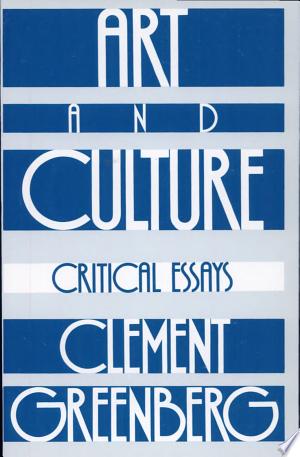
As art critic for The Nation from 1942 to 1949, Greenberg became the first writer to champion Jackson Pollock, recognizing in the painter's 'all-over' canvases the culmination of a trajectory that began with Manet and continued through Cezanne, Cubism, and Mondrian. His argument -- that the history of modernist painting was a progressive purification, each generation stripping away the inessential to reveal the irreducible conditions of the medium -- became the dominant framework for understanding modern art for decades. Art and Culture (1961), his only essay collection published during his lifetime, codified this vision.
Greenberg's formalism was both celebrated and fiercely contested. His insistence that quality in art was objective and perceivable, that certain works succeeded on purely visual terms independent of their subject matter or social context, made him a polarizing figure. Critics accused him of narrowness, authoritarianism, and a suspicious alignment with Cold War cultural politics. Yet even his detractors acknowledged the clarity and consequence of his critical judgments, and his influence on artists, curators, and subsequent critics was unmatched.
His legacy is complex: he is simultaneously the critic who made Abstract Expressionism legible to the world and the rigid formalist against whom an entire generation of postmodern thinkers defined themselves. Whether one reads him as a liberator or a gatekeeper, his prose retains its power to provoke argument about what art is, what it should do, and how we should judge it.