Architecture
Bruce Mau
Canadian designer who co-produced S,M,L,XL with Rem Koolhaas, founded Bruce Mau Design, and launched the Massive Change project, expanding the definition of design from the shaping of objects to the reshaping of systems, economies, and global challenges.
Why They Matter
Bruce Mau was born in 1959 in Sudbury, Ontario, a mining town in northern Canada whose stark industrial landscape gave him an early awareness of how human enterprise transforms environments at scale. He studied at the Ontario College of Art (now OCAD University) in Toronto but left before completing his degree, entering professional practice in the mid-1980s. He worked briefly with Pentagram in London before returning to Toronto, where he founded Public Good Design and Communications in 1985, later renamed Bruce Mau Design (BMD).
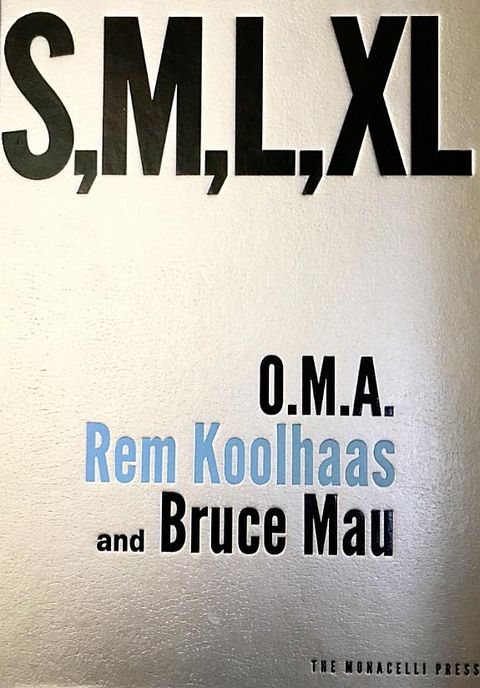
Mau's breakthrough came through his collaboration with the Dutch architect Rem Koolhaas on S,M,L,XL, published in 1995 by the Monacelli Press. The 1,376-page book was not merely designed by Mau but co-authored in a meaningful sense: he shaped its structure, sequencing, and visual logic, creating a hybrid of monograph, novel, dictionary, and manifesto that redefined what an architecture book could be. The project demonstrated Mau's conviction that design is not decoration applied after the fact but a mode of thinking that structures how ideas reach an audience. The book became a cultural phenomenon and established Mau as one of the most ambitious designers of his generation.
In 2004, Mau launched Massive Change, a book and exhibition developed with the Institute without Boundaries at George Brown College in Toronto. The project surveyed design's expanding role in addressing global challenges -- from energy systems and urban infrastructure to biotechnology and information networks -- arguing that design had moved far beyond the shaping of consumer products into the redesign of the systems that govern modern life. His 1998 manifesto "An Incomplete Manifesto for Growth," a list of forty-three aphoristic principles for creative practice, circulated widely in design schools and studios worldwide.
Mau served as chief design officer of Freeman, a global brand experience company, and co-founded the Massive Change Network to apply design thinking to large-scale institutional and environmental challenges. His intellectual lineage connects the graphic design tradition of typographic rigor to the systems thinking of Buckminster Fuller and the media theory of Marshall McLuhan, both fellow Canadians whose influence Mau has openly acknowledged. His career represents a sustained argument that design's highest purpose is not the production of beautiful objects but the transformation of the conditions in which people live.