Architecture
Aldo Rossi
Italian architect, theorist, and designer who won the 1990 Pritzker Prize and whose book The Architecture of the City restored typology and collective memory to the center of architectural discourse.
Why They Matter
Aldo Rossi was born in Milan in 1931 and grew up during the upheavals of World War II, spending his early school years at Lake Como and Lecco before entering the Milan Polytechnic University, where he received his architecture degree in 1959. From 1955 to 1964 he served as editor of the influential journal Casabella-Continuita, immersing himself in the theoretical debates that were reshaping Italian architecture. His intellectual formation drew on the rationalist tradition of the Tendenza movement, the urban morphology studies of Saverio Muratori, and a deep engagement with Enlightenment architecture.
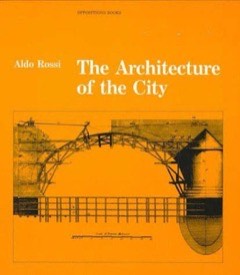
The Architecture of the City, published in 1966, proposed that urban form should be understood through typology and collective memory rather than the functionalist categories that dominated postwar planning. The book argued for an autonomous architecture rooted in historical permanence, where urban artifacts accumulate meaning across time independent of their original purpose. It became one of the most cited texts in architectural theory and a cornerstone of the postmodern and neo-rationalist movements.
Rossi's built work achieved an austere, haunting quality that matched his theoretical ambitions. His cemetery of San Cataldo in Modena, the floating Teatro del Mondo for the 1980 Venice Biennale, and the Bonnefanten Museum in Maastricht are among the most distinctive buildings of the late twentieth century. His watercolors and drawings, with their dreamlike assemblages of geometric forms, became celebrated works of art in their own right.
In 1990 Rossi became the first Italian to receive the Pritzker Architecture Prize. Ada Louise Huxtable, the architectural critic and Pritzker juror, described him as "a poet who happens to be an architect." Rossi's influence extends across architecture, urban design, and visual art, and his insistence on the city as the primary subject of architectural thought continues to shape how designers understand the relationship between buildings and the places they inhabit. He died in Milan in 1997.