Quarto
Authors/Alain de Botton

Architecture

Alain de Botton

Swiss-born British philosopher, essayist, and cultural entrepreneur whose books on travel, love, work, and architecture bring philosophical inquiry to everyday life, and whose The Architecture of Happiness examines how buildings shape emotional experience and express cultural ideals of the good life.

Why They Matter

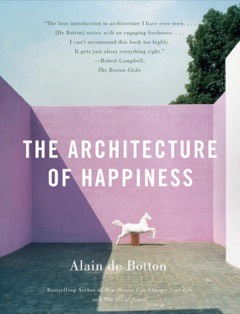
Alain de Botton was born in 1969 in Zurich, Switzerland, into a prominent family in the financial world. He moved to England at the age of eight, attended the Dragon School in Oxford and then Harrow, before reading history at Gonville and Caius College, Cambridge. He subsequently pursued graduate work in philosophy at King's College London, though he left without completing a doctorate, having already decided that his intellectual ambitions were better served by writing for a general audience than by conventional academic scholarship. His first book, Essays in Love (1993), published when he was twenty-three, demonstrated the method that would define his career: applying the tools of philosophical analysis to the textures of everyday emotional and material life. De Botton's body of work spans philosophy, psychology, architecture, travel, and work, unified by the conviction that ideas drawn from the Western philosophical and literary tradition can illuminate the ordinary predicaments of modern existence. His books -- including How Proust Can Change Your Life (1997), The Consolations of Philosophy (2000), Status Anxiety (2004), and The Art of Travel (2002) -- have been translated into over thirty languages and have made him one of the most widely read philosophers of his generation. His success rests on a prose style that is lucid, witty, and free of jargon, combined with a willingness to take seriously the questions that academic philosophy often dismisses as trivial. The Architecture of Happiness, published in 2006, turns this philosophical attention to the built environment, asking why certain buildings make us feel at ease while others oppress or alienate. De Botton draws on John Ruskin, Le Corbusier, Adolf Loos, and the eighteenth-century aesthetics of the picturesque and the sublime to argue that architectural beauty is not a frivolous luxury but a psychological necessity -- that our buildings express and reinforce our ideals of who we wish to be. The book rejects both the position that beauty is purely subjective and the modernist doctrine that form should follow function alone, arguing instead that our aesthetic responses to buildings encode genuine moral and philosophical commitments. In 2008 de Botton founded The School of Life, an educational organization offering courses, workshops, and publications on emotional intelligence, relationships, and work. In 2009 he founded Living Architecture, a nonprofit that commissions houses by leading contemporary architects -- including Peter Zumthor, MVRDV, and John Pawson -- and makes them available as vacation rentals, giving the public direct experience of ambitious residential design. These institutional projects reflect his belief that philosophy and architecture alike must escape the seminar room and the gallery to reach the conditions of daily life. He lives in London and continues to write and lecture on the intersection of culture, psychology, and the built environment.

Notes

Philosophy at the Threshold of the Built World

De Botton's contribution to architectural discourse is that of the informed outsider: he approaches buildings not as a practitioner concerned with structure, program, and budget but as a philosopher asking why certain spaces console while others disturb. This perspective, which draws on the aesthetics of Ruskin and Stendhal as much as on the theories of Loos and Le Corbusier, recenters the conversation on the inhabitant's emotional experience -- a dimension that professional architectural criticism often acknowledges in principle but neglects in practice. His founding of Living Architecture extended this argument from the page to the physical world, insisting that the gap between architectural ambition and everyday experience is not inevitable but a failure of access that institutions can address.